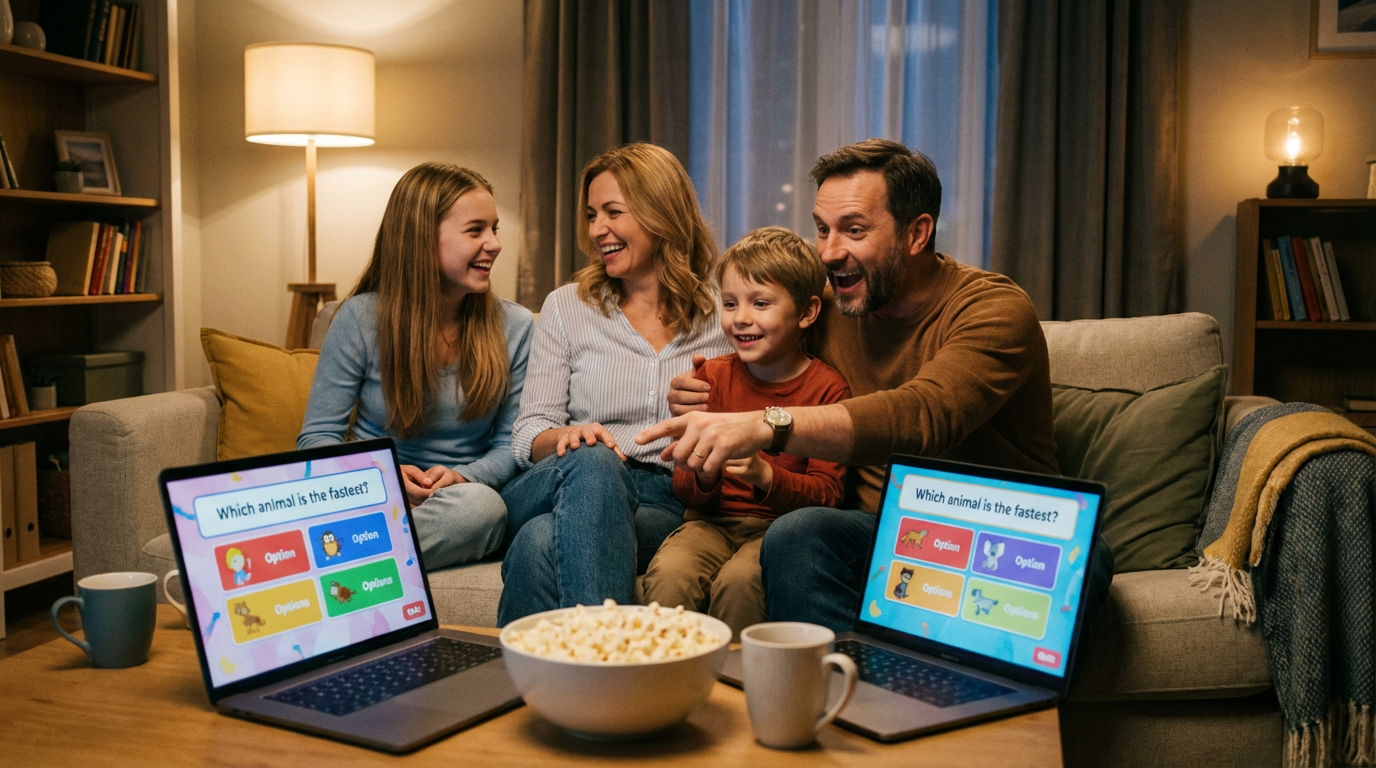
The battle over screen time is a familiar struggle in almost every modern household. We worry about passive consumption, the endless scroll of social media, and the solitary nature of many digital activities. But what if we could harness the power of the screen not as a digital babysitter, but as a campfire for family connection, laughter, and learning?
It’s time to reframe our approach. Instead of fighting against screen time, we can transform it into an active, collaborative, and deeply engaging experience. The solution is simple, affordable, and wonderfully effective: hosting your own fun family quiz night.
A well-planned quiz night isn’t just another trivia game; it’s a structured event that encourages communication, celebrates knowledge of all kinds, and creates lasting memories. This guide will walk you through everything you need to know to turn a regular evening into your family’s most anticipated new tradition.
1. Laying the Foundation: Choosing Your Quiz Theme and Topics
The secret to a quiz that engages everyone, from a six-year-old to a teenager, is variety. A great family quiz is a tapestry woven from threads of everyone’s interests. Before you write a single question, decide on your rounds. Aim for 4-5 rounds of 5-10 questions each to keep the pace brisk.
Start by brainstorming categories that reflect your family’s unique passions:
- The “Expert” Round: Dedicate a round to each family member’s favorite subject. This could be “Minecraft Trivia” for one child, “Disney Princesses” for another, and “80s Rock Music” for a parent. This guarantees that everyone gets a moment to feel like a genius.
- The “Family History” Round: Include questions only your family would know. “What was the name of our first pet?” or “In which city did Mom and Dad first meet?” This fosters a sense of shared identity and is often the source of the biggest laughs.
- Creative Rounds: Think beyond simple questions. A “Guess the Logo” picture round or a “Name That Tune” music round (where you play 10 seconds of a song) are always huge hits.
To make the quiz both fun and educational, you can gently broaden their horizons. For instance, you could include a few rounds based on a weekly quiz on current affairs to discuss what’s happening in the world in a kid-friendly and age-appropriate manner. The key is balance; mix the silly with the serious, the personal with the general.
2. The Art of the Question: Crafting Trivia for All Ages
Writing questions for a mixed-age group is the biggest challenge, but also the most rewarding. The goal is not to stump your kids, but to make them feel smart and capable.
Here are some pro tips for crafting family-friendly questions:
- Embrace Multiple Choice: For younger children, multiple-choice questions are perfect. They provide context clues and prevent the frustration of not knowing an answer at all. You can even make the incorrect options funny.
- Use Visuals: A picture is worth a thousand words. Create a round where you show pictures of different animals, country flags, or famous landmarks. This is fantastic for visual learners and pre-readers.
- “Whose Is It?” Questions: Create questions that have an answer for everyone. For example: “What is Mom’s favorite movie? What is Dad’s favorite food? What is [Child’s Name]’s favorite video game?” These questions are less about knowledge and more about how well you know each other.
- Team Up: If you have a wide age gap between children, consider having them play on the same team. This encourages older siblings to help younger ones, fostering teamwork instead of rivalry.
3. Setting the Stage: Turning a Game into an Event
How you present the quiz is just as important as the questions themselves. You are not administering a test; you are hosting an event. A little bit of showmanship can transform a simple game into a magical family tradition.
Think about the atmosphere:
- The Grand Reveal: Announce “Family Quiz Night!” a day or two in advance to build excitement.
- Snacks are Non-Negotiable: A bowl of popcorn, some ice cream, or their favorite snacks makes the evening feel special and celebratory.
- Create Silly Team Names: Let the kids come up with ridiculous team names like “The Smarty Pants” or “The Brainy Bunch.”
- The Quizmaster’s Podium: Designate a special chair or spot for the host (the Quizmaster). You can even use a silly hat or a wooden spoon as a pretend microphone.
These small details signal that this isn’t just another boring evening at home. It’s an occasion, a special time set aside just for family fun.
4. Being the Best Quizmaster: It’s All About the Fun
Your role as the Quizmaster is to be the “Fun-Master-in-Chief.” Your energy will set the tone for the entire night.
- Be an Entertainer, Not a Teacher: Read the questions with enthusiasm. Use different voices. Ham it up! The more fun you have, the more fun your family will have.
- Be Flexible with the Rules: If a question is too hard, give a clue. If a younger child gives an answer that’s “close enough,” consider awarding half a point. The goal is encouragement, not rigid accuracy.
- Celebrate Every Answer: When a team gets an answer right, celebrate with them! A “Great job!” or a little celebratory dance makes them feel brilliant. When they get it wrong, reveal the correct answer with excitement, “Oh, did you know it was actually… How interesting!”
5. The Grand Finale: Prizes and Bragging Rights
The end of the quiz should be just as fun as the beginning. The prizes for a family quiz night should never be about monetary value; they should be about fun, privileges, and, of course, bragging rights.
Great prize ideas include:
- The winning team gets to choose the movie for family movie night.
- The winner is exempt from one chore for the week.
- A small, silly “Smartest Family Member” trophy that gets passed around after each quiz.
- The winner gets to choose their favorite dessert for the next night.
The most important prize is the feeling of accomplishment and the shared laughter. Make sure to praise everyone for their effort and for being a good sport.
Conclusion
In a world where families can be in the same room but lost in their own separate digital worlds, a family quiz night is a powerful act of reconnection. It uses the very screens we often see as a problem and transforms them into a tool for collaboration, learning, and laughter. It teaches children that knowledge is fun, that their unique interests are valuable, and that the best part of any game is playing it together.
Planning a fun family quiz night is more than just scheduling an activity. It’s about intentionally carving out time to build your family’s culture, strengthen your bonds, and create a treasure trove of happy memories. It’s the one form of screen time you will never regret.
Frequently Asked Questions (FAQ)
1. How do I create a quiz that’s fair for different age groups?
The key is balance and teamwork. Create rounds specifically tailored to different age groups (e.g., a cartoon character round for young kids). Alternatively, form mixed-age teams where older siblings and parents can help the younger ones. This encourages collaboration over competition.
2. How can I stop the kids from just shouting out answers or cheating with phones?
Establish clear and simple rules at the start in a fun way. Have a “no phones allowed” basket where everyone puts their device. For shouting out, you can have a funny “penalty” like having to sing a silly song. Keeping the atmosphere light and fun usually encourages good sportsmanship.
3. How long should a family quiz night last?
Keep it short and sweet. For families with younger children, 30-45 minutes is a perfect length. For families with teens, you can stretch it to an hour. Aim for 4-5 rounds of 5-10 questions each. It’s always better to leave them wanting more than to have them get bored.
4. What if my kids say they’re not interested or that quizzes are “boring”?
The “sell” is crucial. Don’t call it a “test.” Call it a “Family Game Show Night.” Get them involved in the preparation. Let them choose the team names, the snacks, and even a theme for one of the rounds. Once they feel a sense of ownership, their interest will skyrocket.
5. Do I need to be a trivia expert to host a quiz?
Not at all! You are the host, not a contestant. The internet is your best friend for finding fun questions and verifying answers. The most important skill for a family Quizmaster is not knowing all the answers, but knowing how to create a fun, loving, and encouraging atmosphere.