
In industrial operations, gear-driven systems are everywhere—conveyors, mixers, compressors, crushers, elevators, and countless other machines depend on gears to transmit power reliably. While gears themselves are engineered with precision, their performance and lifespan depend largely on one critical factor: the gear oil that protects them. Choosing the right gear oil is not a routine maintenance task; it is a technical decision that directly influences efficiency, safety, and long-term operating costs.
Why Gear Oil Deserves More Attention Than It Gets
Gear oil is often viewed as a consumable rather than a performance component. This mindset can be costly. In reality, gear oil acts as the first line of defense against mechanical stress. Industrial gears are exposed to continuous pressure, shock loads, vibration, and varying temperatures. Without the correct lubricant, even the strongest gear materials can fail prematurely.
One key function of gear oil is surface protection. Under high load, microscopic asperities on gear teeth can weld together, leading to scoring and surface fatigue. Gear oil prevents this by maintaining a strong lubricating film. It also helps control friction, which has a direct impact on energy consumption. Poor lubrication increases resistance, forcing motors to work harder and consume more power.
Additionally, gear oil plays a vital role in system cleanliness. Quality gear oils suspend contaminants and wear particles, reducing abrasive damage. They also protect internal components from rust and oxidation, especially in humid or chemically aggressive environments. When gear oil is selected thoughtfully, it becomes a reliability tool rather than just a maintenance item.
Types of Gear Oil
Industrial gear oils are formulated for different operating demands. Understanding their differences helps in selecting the right product for each application.
1. Mineral-Based Gear Oils
These oils are derived from refined crude oil and are widely used in conventional industrial gearboxes. They provide reliable lubrication for moderate loads and stable operating conditions. Mineral oils are economical and suitable where oil change intervals are relatively short.
2. Synthetic Gear Oils
Synthetic gear oils are engineered for demanding applications. They offer superior resistance to oxidation, excellent thermal stability, and consistent viscosity across wide temperature ranges. These oils are ideal for high-load, high-temperature, or continuous-duty systems where extended drain intervals are desired.
3. Extreme Pressure (EP) Gear Oils
EP gear oils contain specialized additives that activate under high stress, forming a protective layer on gear surfaces. They are essential in applications with shock loading, heavy torque, or slow-moving gears where metal-to-metal contact risk is high.
4. Compounded Gear Oils
Often used in worm gear applications, compounded oils include additives that improve lubricity and water resistance. They reduce friction in systems with high sliding contact and help maintain efficiency in specialized gear designs.
5. Specialty and Application-Specific Gear Oils
Some industries require gear oils with additional properties, such as food-grade approval, biodegradability, or enhanced corrosion resistance. These oils are designed to meet regulatory or environmental requirements without compromising performance.
How to Choose Gear Oil According to Load and Speed
Selecting the correct gear oil involves matching the lubricant’s properties to how the gear system operates. Load and speed are the two most critical factors.
Load Considerations
-
Heavy loads and shock conditions demand oils with high load-carrying capacity and EP additives. These oils protect gear teeth from surface damage and deformation.
-
Light to medium loads can operate efficiently with standard gear oils, provided viscosity and thermal stability are adequate.
Ignoring load conditions can result in rapid wear, pitting, or even gear tooth failure.
Speed Considerations
-
Low-speed gear systems require higher viscosity oils to maintain a stable lubricating film under slow movement and high torque.
-
High-speed gear systems benefit from lower viscosity oils that reduce fluid friction, control heat generation, and improve overall efficiency.
Temperature and Operating Environment
Gear oil viscosity changes with temperature. In high-temperature environments, oils with strong oxidation resistance are essential. In cold-start conditions, good low-temperature flow ensures immediate lubrication and prevents startup damage.
Gearbox Design and Duty Cycle
The type of gears (spur, helical, bevel, worm) and whether the machine operates intermittently or continuously also influence oil selection. Continuous-duty systems often justify higher-performance oils that reduce maintenance frequency and downtime.
Manufacturer and Industry Standards
Always align oil selection with OEM recommendations and applicable industry standards. This ensures compatibility with materials, seals, and warranty requirements.
MAGNUM Gear Oils: Perfect Fit for Industrial Machines
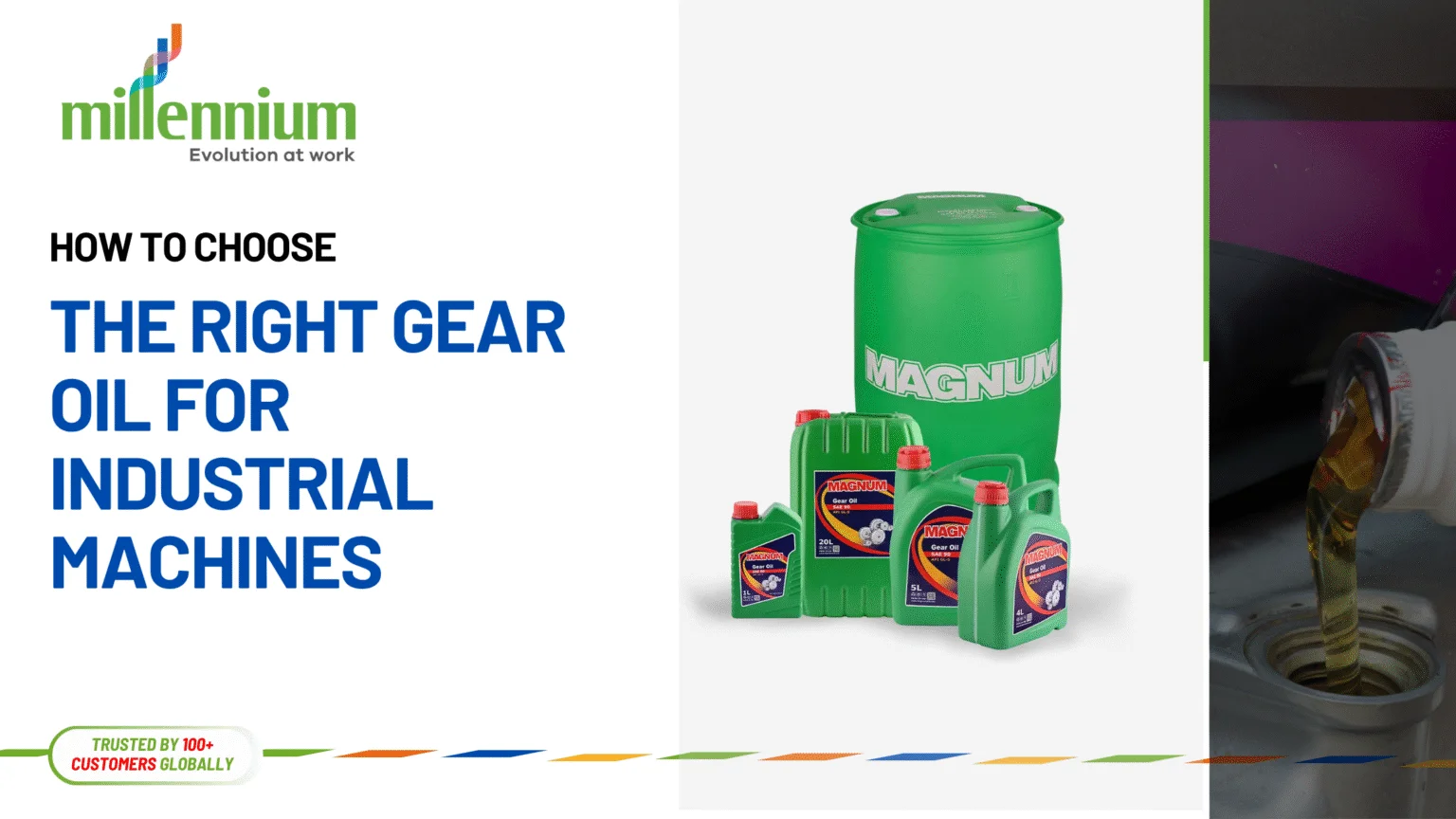
MAGNUM Gear Oils are developed to meet the complex demands of modern industrial equipment. Using carefully selected base oils and advanced additive technology, MAGNUM gear oils deliver dependable protection across a wide range of operating conditions.
Key advantages of MAGNUM Gear Oils include:
-
Strong wear protection for heavily loaded gears
-
Excellent thermal and oxidation stability for longer oil life
-
Consistent performance across varying speeds and temperatures
-
Reduced maintenance needs and improved equipment reliability
Conclusion
Choosing the right gear oil is a strategic maintenance decision that directly affects machine performance and operational costs. By understanding why gear oil is critical, recognizing the different types available, and selecting the correct oil based on load, speed, and operating conditions, industries can significantly extend equipment life and improve efficiency.